What your genes say
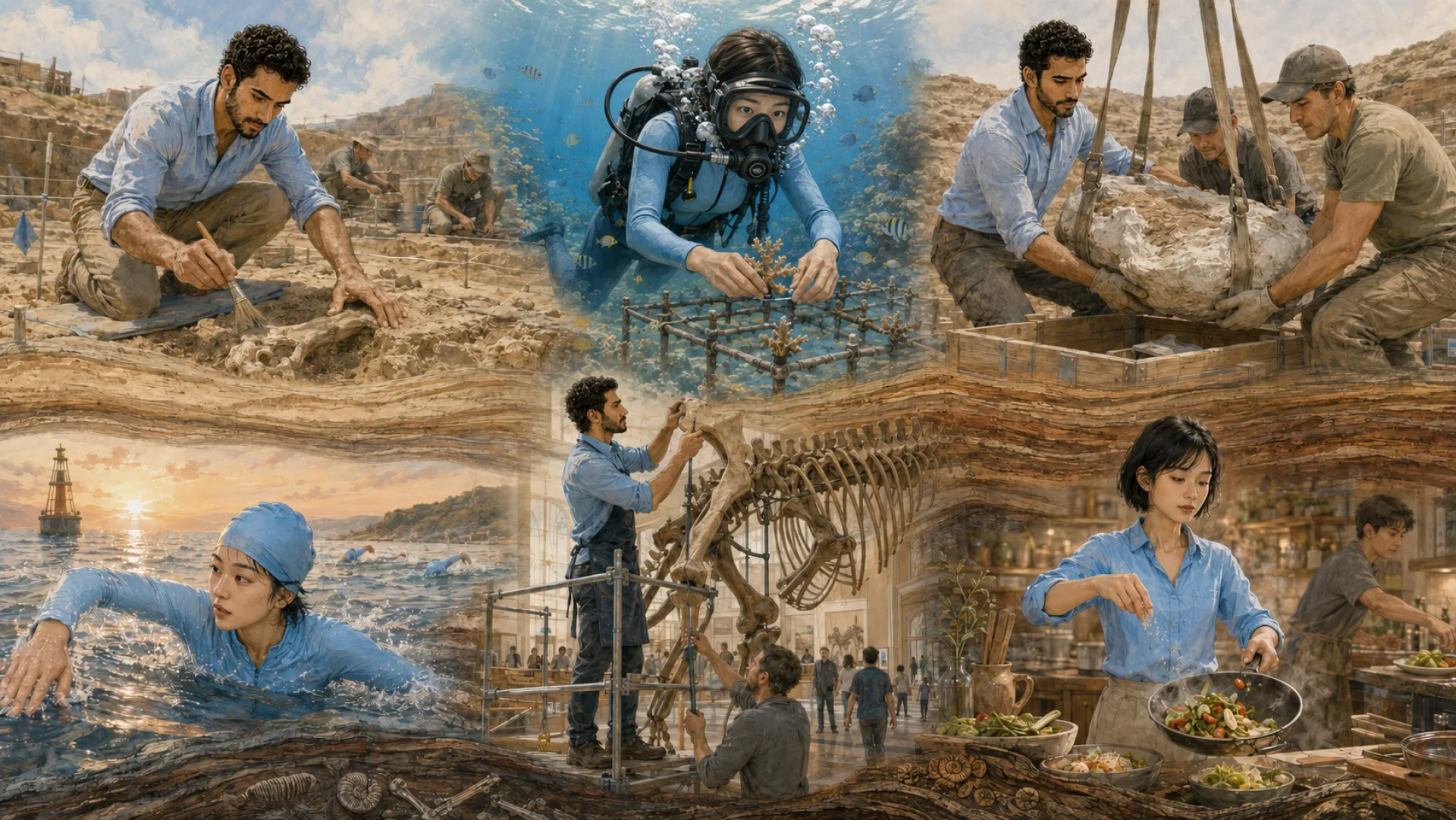
You know the things you look after well enough to see them change. Under the water on a coral reef, a small team is tending rows of young coral they planted by hand. You stop at one piece you have checked every week since it went in, because it looks paler than it did last time. You look closer and make a note before you signal to anyone.

By the next dive it is recovering, and most of the team never knew it was struggling. A keeper is someone trusted to look after something for years, and you know yours so well that the smallest change stands out.
Some of this is learned. Some of it is biology, and that part has a name.
Yours is called The Keeper.
The short version
You like to understand what you are looking after. Over time, that knowledge helps you decide when to step in and when to leave things alone. What you need is to know something well enough to see it change. What you fear is learning afterwards that the sign was there, and you missed it.
Thus each and every detail has a place, origin, and order of its own. Vitruvius, The Ten Books on Architecture, Book IV (trans. Morris Hicky Morgan)
Why DNA?
Think of DNA as a set of biological instructions written before you were born.
Your DNA does more than set your eye colour or height. Your genes also influence how your muscles are built, how your body produces energy, how your skin protects itself and how your brain processes information. Together, these biological settings help shape your DNA-Archetype.
They do not dictate your personality or your choices, but they can influence how your body naturally responds. Some things you have always thought of as ‘just me’ may have a biological layer too.
These are your factory settings. You did not choose them, but once you know them you can design around them.
The five settings that make you The Keeper are: Resilient Body, Endurance Energy, Sensitive Skin, Focused Social Wiring, and Analytical Mind.