
DNA Stories Living with Genes

Are Insurance Companies Using Your Genetic Data?

Well, they probably are, but NOT in the way you think.

Cedric Lee

Founder and CEO, ConnectingDNA · · 7 min read

Editor's note. This issue first ran in November 2023 and keeps the voice it was written in. We are more careful today about what a DNA test can tell you, and What your DNA can and cannot tell you sets out where we stand.

In the rapidly evolving landscape of health and aging, life insurance is a necessity to protect our way of life.

When you apply for a life insurance policy, your insurance company will typically ask you for information such as age, gender, job and any pre-existing health issues to assess your eligibility for the application.

A silhouetted family standing under an umbrella at sunset
Having sufficient life and family insurance coverage is so important in this time and age. Image generated by Midjourney AI.

But does taking a DNA test hurt your chances of getting insured? And could your genetic results be leaked to your insurer, resulting in higher premiums or even denial of coverage?

This fear is not unfounded, as many consumers are cautious about doing a DNA test because they are fearful that it may impact their policies.

However, the reality could not be further from the truth.

Here is why.

Can Insurers Use Your DNA?

In Singapore, a moratorium agreed by the Ministry of Health and the Life Insurance Association keeps genetic test results out of ordinary insurance applications.

In Singapore, not for an ordinary application. Life insurers may not ask for your genetic results, an existing policy cannot be cancelled because you took a test, and consumer tests are never used for underwriting.

Globally, many countries have set up a Moratorium on Genetic Testing and Insurance to protect consumers from discrimination based on their genetic results.

In Singapore, life insurers like Prudential, AIA, Manulife, and many others are not allowed to ask you for your genetic results for underwriting purposes.

A pair of reading glasses resting on a printed policy document
Insurance underwriters cannot use your genetic information to assess your applications. Image generated by Midjourney AI. Photo credits to Unsplash.

Even if you already have a life insurance policy, your genetic test results will not affect your existing coverage. This means your insurance policy cannot be cancelled, even if you took a DNA test that shows you have a higher likelihood of developing a certain type of disease or cancer.

In fact, insurance underwriters can only rely on medical health screening reports when assessing your risk for life insurance policies, as a DNA test and a medical health screening test are fundamentally different.

However, there are exceptions to this.

You Hold High-Value Coverage

High-value clients can pose a risk to insurance companies. They want your money, but must also mitigate potential risk.

A man in a suit adjusting his cufflinks at the foot of an escalator
Wealth can solve many problems, but sometimes being wealthy may also be troublesome. Image generated by Midjourney AI. Photo credits to Unsplash.

So how high is considered high?

It actually varies from country to country.

In Singapore, a life insurance plan exceeding $2 million or a critical illness plan surpassing $500,000 would be considered high.
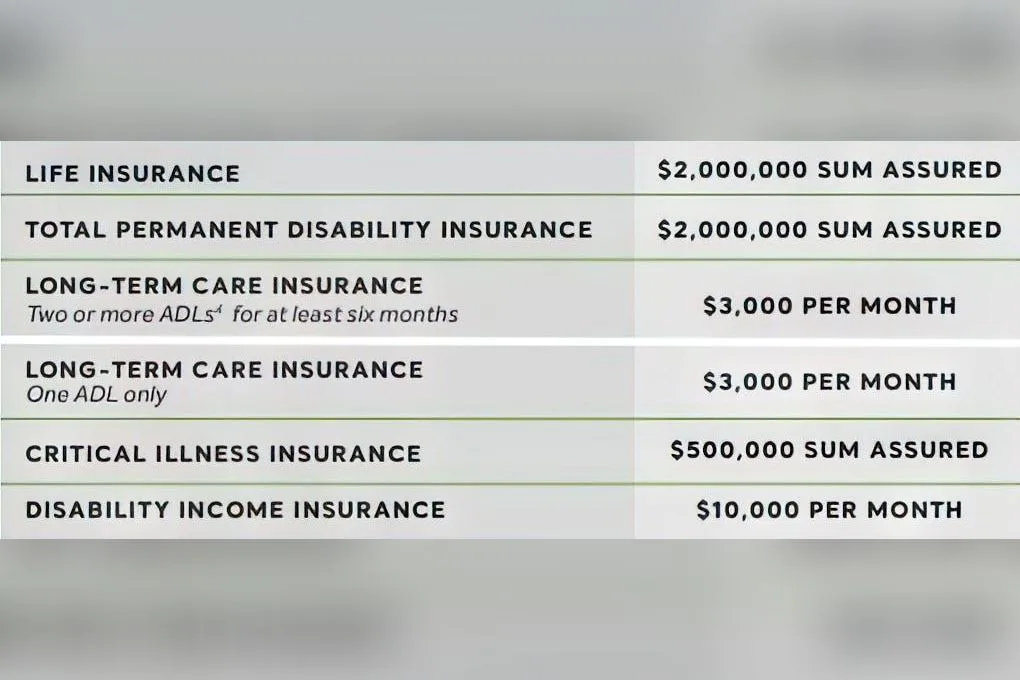
A table of the coverage thresholds above which an insurer may ask about genetic tests
Extracted from the Moratorium on Genetic Testing and Insurance by the Singapore Ministry of Health (MOH) and the Life Insurance Association (LIA). If you have questions, seek guidance from your personal insurance advisor.

However, in Australia, high coverage is defined as a plan exceeding $500,000 for death and total permanent disability.

When you attain such substantial coverage (and wealth), your insurer would have to ask whether you have undergone any genetic tests revealing your hereditary risks as part of the insurance application process. The 2 primary genetic risks they look for are:

  • Huntington’s disease (HTT gene)
  • Breast cancer (BRCA1 or BRCA2 gene)

While your other risks may or may not be considered, only DNA results from an approved medical genetic test prescribed by a doctor can be accepted by insurance underwriters. Direct-to-consumer tests like 23andMe, CircleDNA, Ori DNA and eBeauty DNA cannot be considered due to the fundamental regulatory differences between consumer DNA tests and medical DNA tests.

Consider this scenario

Kelly intends to purchase a $1,000,000 sum assured for critical illness.

Because her coverage is considered high under Singapore’s standards (more than $500,000 for critical illness), her insurer must ask if she has undergone any medical DNA tests previously.

If she admits to a clinical genetic test for breast cancer, Kelly must declare the result for her insurance application review.

Based on this information, her insurer will determine eligibility and the final cost for her $1,000,000 critical illness plan.

Sounds troublesome to buy a high-value insurance plan?

Yes it is, because a high-value life policy also means greater risk to the insurance company taking you up as a client.

Imagine the extra paperwork your poor insurance advisor has to do just to get your application approved.

Tall stacks of paper files piled on an office desk
The life of a typical insurance advisor is filled with paperwork; the more they sell, the more paperwork they have to do. Photo credits to Unsplash.

Furthermore, there are cases where clients intentionally withheld genetic information when applying for an expensive policy and were later discovered, jeopardising the validity of their policy and the careers of the insurance advisors serving them.

Not exactly an advantage, is it?

So how do insurance companies take advantage of your genetic results then?

Designing Precise Insurance Plans

Insurance advisors have to take a personalized approach when selling insurance. This process involves building trust and highlighting long-term value.

With client consent, genetic insights can enable your insurance advisor to have a more nuanced understanding of your health risks, allowing them to provide a higher level of personalised service, and align coverage more closely to your desired way of life.

But before you think “Oh no, my insurance agent who is also my friend, neighbour, relative or colleague-with-a-side-hustle is going to sell me more insurance plans!”, it may be wise to consider the advantages of buying insurance based on predictions of your DNA test, before anything really happens.

I call this the “Triple Advantage”: Cheaper, Earlier, Smarter.

A delighted couple surrounded by falling banknotes
A smart and savvy consumer knows what to buy, and most importantly, when to buy. Image generated by Midjourney AI.

Advantage 1: Cheaper Premiums

Knowing you are at higher risk of a particular disease does not necessarily mean you will definitely get it. However, it would also be prudent to buy coverage at lower premiums early on to shield yourself from potential future rate increases.

For example, buying a $250K life policy in your 20s will lock in a premium of $40 a month against a whopping $105 a month when you buy at 45 years old, therefore resulting in massive cost savings over time.

Advantage 2: Earlier Protection

Many health issues or tragedies can be sudden and unexpected. But once we know our inherent risks (heart risk, for example), we can “predict” our chances and create financial strategies earlier to protect ourselves and our loved ones before incidents happen.

This is particularly true as more young people are suffering from sudden cardiac arrest even though they are fit athletes, leaving behind grieving parents, spouses, and children.

Advantage 3: Smarter Planning

You have probably heard of this adage, “Prevention is better than cure”. However, I would argue that a better quote should be “Prevention plus protection is better than cure”.

While having the assurance of a handsome insurance payout is good, and it is better to be sick and rich rather than sick and poor (from all the hospital bills), I bet none of us want to be sick in the first place.

That is why a smarter way of life planning is not just about being protected financially, but also proactively using our genetic health insights to reduce our risk of disease through correct lifestyle and food choices.

Conclusion

Looking ahead, the future of life insurance may lie in the hands of consumers who embrace the potential of DNA testing.

In conclusion, the marriage of DNA testing and life insurance presents an opportunity for consumers to not only protect their financial future more effectively but also to do so at a lower cost.

A hand dropping a coin into a piggy bank beside a rising DNA helix and stacks of coins
The future of smart insurance is probably one with precise and personalised recommendations. Image generated by Midjourney AI and edited in Photoshop.

By understanding and navigating the current underwriting landscape, smart consumers can embrace the future of insurance, one where genetic information becomes a tool for better, more affordable, and earlier protection.

As much as I hate to be sold to, I also realise how important it is to buy right. So give your insurance agent a chance, and maybe even yourself as well, to unlock the possibilities of a better financial tomorrow.

Sources

  1. Moratorium on Genetic Testing and Insurance (Ministry of Health, Singapore)
  2. Use of genetic test results in insurance underwriting in Singapore (Ministry of Health, 2021)
  3. Life insurance rates by age (Bankrate, 2023)
  4. Why do fit runners suddenly die while running marathons (RunSociety, 2022)

Everything we hold and how it is protected is set out on the Data Privacy page. What your report can tell you is on Why DNA.

Cedric Lee

Cedric Lee

Founder and CEO, ConnectingDNA

Cedric has spent over twenty years in healthcare, wellness and technology, and has taken his own DNA test with more consumer labs than he cares to admit. He writes the Living with Genes newsletter and founded ConnectingDNA to turn genetic reports into something a person can act on.

Connect on LinkedIn ↗

First published on Living with Genes, Issue 8. Rewritten and brought up to date for this site.

Know someone who should read this?

Keep reading

All stories →

Why you shouldn't upload your DNA report to ChatGPT

The same applies to Claude, Gemini and other public AI.

26 Sept 2026 · 6 min read

What your DNA can and cannot tell you

A short, honest list of what a wellness test can and cannot do.

5 Aug 2026 · 4 min read

ConnectingDNA awarded ISO 27001 certification

Independent proof that your DNA data is kept safe.

7 Apr 2026 · 2 min read

The Genetic Symphony Between Chromosomes, Genes, And DNA

What do music and DNA have in common? If they aren't composed properly, you won't enjoy your life.

4 Dec 2023 · 6 min read

DNA Testing VS Health Screening Checkup: A Pilot's Perspective

Like water and oil: they flow the same, yet are totally different.

20 Nov 2023 · 5 min read

5 Reasons To Consider A DNA Test: Unlock Your Potential!

Knowing yourself inside-out helps you appreciate life more.

13 Nov 2023 · 7 min read

Giving Our Children A Brighter Future. From Genes To Geniuses!

Raising kids is hard. But if we know our child's natural talents and traits, things might get a lot clearer, and easier.

6 Nov 2023 · 5 min read

7 Reasons Why Your DNA Report May Feel Inaccurate!

Most DNA reports are quite accurate, but things can sometimes get weird.

16 Oct 2023 · 9 min read

Consumer VS Medical DNA Testing: Unveiling Your Genetic Code!

Helping you dissect the best options you can have for your precious saliva sample.

9 Oct 2023 · 5 min read

I have a DNA report. So what?

You read your DNA report once, then forgot it. Here is what it is for.

9 Jul 2026 · 7 min read

Cedric Lee's third year as top Genetics Influencer

Three years first in Singapore. Now third in the world.

23 Jun 2026 · 2 min read

DNA-Archetypes: the profiler for your body

Four-letter tests give you 16 types. Adding the body makes 32.

18 Jun 2026 · 5 min read

ConnectingDNA joins Google Cloud startup programme

More computing power behind every answer about your DNA.
12 Jan 2026 · 2 min read

How 30 years of eczema led to ConnectingDNA

One DNA test found the answer, and started a company.

15 Dec 2025 · 5 min read

Gurmit Singh, Healthy Ageing Ambassador

Healthy ageing gets a voice all of Singapore knows.

27 Nov 2025 · 2 min read

ConnectingDNA opens operations office at BLK73

A new home for the team building your Bio-Profile.

10 Nov 2025 · 2 min read

We tell every hire our culture isn't for everyone

Changing the world takes a little bit of crazy.

23 Sept 2025 · 3 min read

ConnectingDNA launches AI DNA-Wellness marketplace in beta

Try the next step for your DNA report early, and help shape it.

15 Sept 2025 · 2 min read

Your genes don't care about wellness trends

The wellness jungle is loud. We're here to map it.

9 Aug 2025 · 4 min read

ConnectingDNA invited to Perth by WA Government

Western Australia came calling. Perth could be next.

29 Jul 2025 · 2 min read

ConnectingDNA selected for Meta Llama initiative

Picking the AI that makes your DNA report make sense.

22 Apr 2025 · 2 min read

ConnectingDNA selected for BLOCK71 Silicon Valley programme

Taking DNA-guided wellness into the toughest room in tech.

25 Nov 2024 · 2 min read

Cedric Lee named top Biology Influencer in Singapore

Plain-English genetics, ranked first in Singapore.

12 Nov 2024 · 2 min read

ConnectingDNA raises US$550,000 in pre-seed funding

Investors are betting on a DNA report you will actually use.

23 Oct 2024 · 1 min read

ConnectingDNA selected by Microsoft and NUS for Gen AI programme

Why the AI reading your DNA has Microsoft in its corner.

1 Apr 2024 · 2 min read

What Is Your Hair Destiny? The Hairy Truth About Balding.

From full hair to farewell hair. Do you embrace fate or fight back? Unlock the secrets to your hair's (possible) demise.

25 Mar 2024 · 5 min read

Grow Bigger Muscles With Your Genes? Yes You Can!

Don't sweat the bench-press, outsmart it! Learn how your genes can help you hack your way to a dream physique.

11 Mar 2024 · 5 min read

Are You Born A Fighter, Or A Thinker? Your Genes Tell The Story

Challenges in life (and work) are inevitable, but whether we fight on, overthink, or give up can be related to our genes.

26 Feb 2024 · 5 min read

Your Genes Might Make You Secretly Heroic And Selfless

Heroes may not just be the stuff of legends. In fact, the potential for heroism and selflessness may lie hidden within us.

12 Feb 2024 · 6 min read

When Bread Betrays You. How To Deal With Gluten Intolerance!

If you are bothered by persistent health issues, the sneaky villain could be in some of the foods you love to eat.

29 Jan 2024 · 8 min read

If You Are Asian, And Overweight? Blame Your Ancestors.

You are born a lean, mean, fat-storing machine, and it's all due to the ancestral genes passed down from your forefathers.

15 Jan 2024 · 4 min read

5 Ways Your Genes Make You Overeat, And Hard To Lose Weight!

Want to stay lean after all your festive feasting? You should first find out how your body works.

2 Jan 2024 · 6 min read

Don't Have The Highest IQ? You Can Still Be Damn Smart!

Honestly, I don't think I have super high IQ. But many of my peers still think I am damn smart.

26 Dec 2023 · 6 min read

Get Cheat Codes To Aging And Longevity By Using Your Genes!

Everybody have a biological clock counting down to the end. What if we can slow down, or even reset that clock?

18 Dec 2023 · 7 min read

Your Heart Is Like A Car Engine. Unleash Its Power!

Some hearts are built like a F1 engine, while others can only power a lawnmower. Which one is yours?

30 Oct 2023 · 9 min read

Your Genes Have An Impact, It's A Multiplier!

Don't let your genes control you. Learn to control them!

24 Oct 2023 · 8 min read