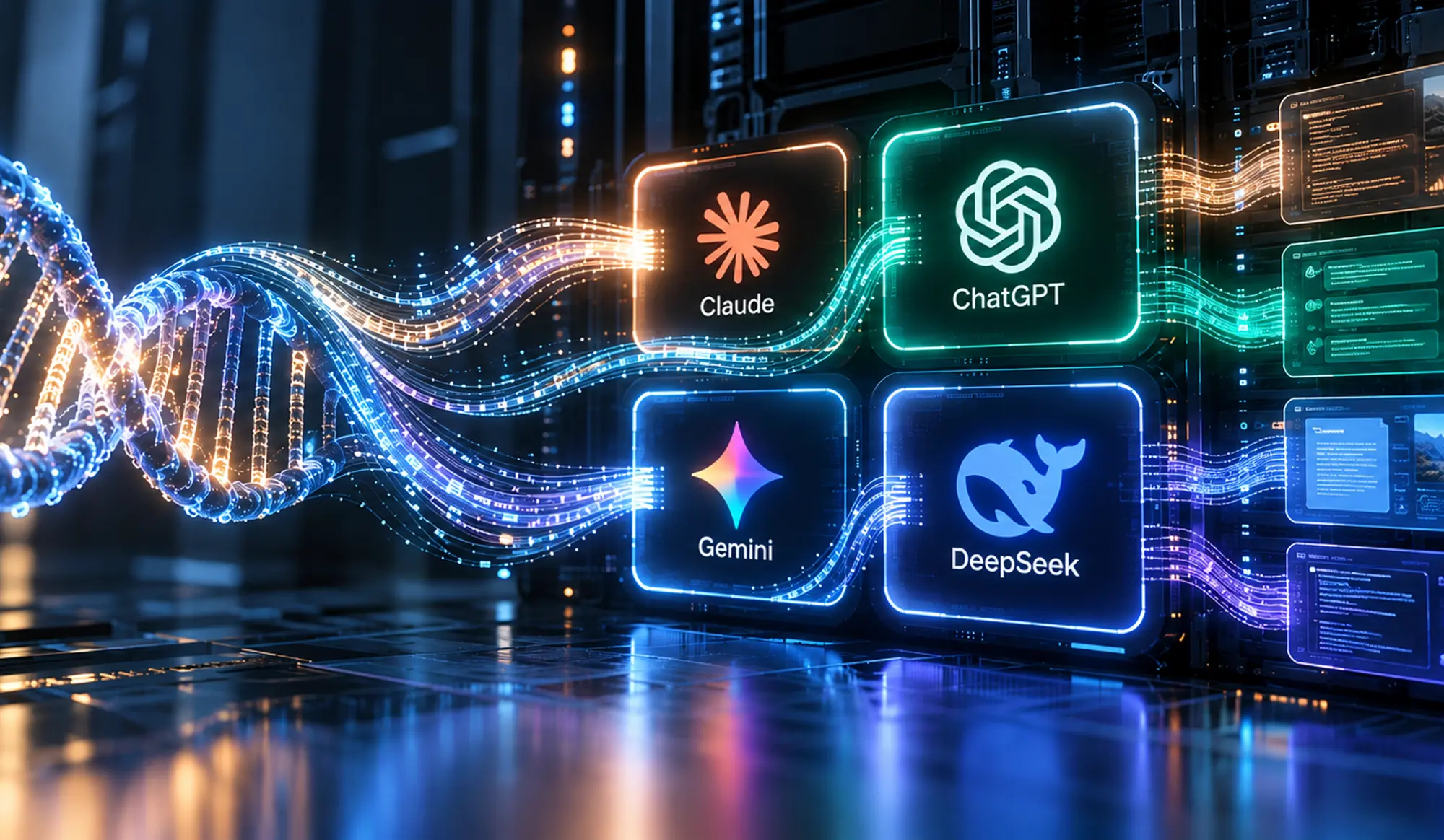
Uploading your DNA report to ChatGPT can feel like the obvious move.
You already have the report. AI reads documents. So why not drop it in and ask:
“What does my DNA say about me?”
There are two problems, and they arrive together. You hand over the most permanent personal data you own, and you get back an answer that sounds certain even when it has misread your report.
Does ChatGPT keep it?
Yes, for a while, and the details depend on the provider, your plan and your settings. They sit in pages most people never open.
OpenAI says it may use what you share on ChatGPT’s individual plans, uploaded files included, to train its models unless you switch off Improve the model for everyone. Google’s Gemini tells you that human reviewers read a subset of chats, that you should not enter confidential information, and that reviewed chats are kept for up to three years. Anthropic’s Claude keeps your chats for five years if you let it train on them, and 30 days if you do not.
Deleting a chat is slower than the button suggests. OpenAI and Anthropic keep a deleted conversation for up to 30 days, and in 2025 a US court ordered OpenAI to keep every consumer ChatGPT conversation, deleted ones included, for more than four months while a newspaper’s lawyers argued over them.
None of these is a health service. Their duty to your genome is whatever their terms say this month. And a DNA report is rarely just DNA: it usually prints your name, date of birth and sample number on the same pages as your results, so one upload hands over who you are and what your genes say together.
DNA cannot be reset
A leaked password is changed in a minute. A stolen credit card is replaced in a week. A leaked genome is leaked for life.
You cannot change your genome.
It is not yours alone, either. Your DNA says things about your parents, your children and your siblings, relatives who never agreed to share it.
The 2023 breach at 23andMe showed what that is worth to an attacker. About 14,000 accounts were opened with passwords reused from other sites, and through them the data of some 6.9 million people was taken, ancestry and health details among it.
AI can miss things
A chatbot does not read a PDF the way you imagine. ChatGPT extracts the text and, for a long document, fetches the passages that seem to match your question rather than holding the whole file in mind.
That works well for a contract or a recipe. A detailed DNA report is neither: it can hold hundreds of traits across 100 to 200 pages.
Long documents are a known weak spot. The 2023 study Lost in the Middle found that accuracy “significantly degrades when models must access relevant information in the middle of long contexts”. Ask about a result on page 140 and the answer may be built from page 3, or from nothing at all.
AI can sound certain
“From nothing at all” has a name: hallucination. Language models are built to produce fluent answers, and when the information is missing they can produce a fluent wrong one.
Genetics is no exception. A 2025 study in iScience found that ChatGPT invented GenBank accession numbers, the reference codes of genetic sequences. A model that fabricates a genetic identifier will fabricate a gene’s effect just as fluently.
Models also tend to agree with the person typing, a habit one 2025 paper in npj Digital Medicine calls the perils of politeness. Tell a chatbot:
“My report says I have the fat gene. What should I eat?”
and it will often start planning your meals. The better first question is the one it skips: does the report actually say that?

Wrong answers have consequences
A wrong answer about your favourite film is harmless. A wrong answer about your DNA gets acted on. Someone who trusts it might:
- cut out a food they never needed to avoid
- double a supplement
- change how they train or sleep
- worry about a trait they do not have
- make a decision on a result that was never in the report
A wrong answer about caffeine costs a few jittery afternoons. One about iron, vitamin D or how hard to push in training can cost more, and the chatbot will not be there when it does.
The danger is that the wrong answer can look almost identical to the right one.
How ConnectingDNA differs
ConnectingDNA built its AI for one job, reading a DNA report, and the difference starts before any model sees a word.
Instead of asking a model to search your PDF every time you ask a question, the Bio-Profile first turns what it can read from a compatible report into structured trait data.
Report first, AI second
When a compatible report is uploaded, the Bio-Profile extracts the traits it can identify and stores each one as a record: the trait, the result and the information behind it.
The AI answers from those records. It works from traits already read out of the report, where a chatbot would be hunting through 150 pages for them.
If the report does not cover a trait, the Bio-Profile should say so rather than invent one.
Identity kept separate
Your name and account are kept apart from your traits, so the data the AI works on is de-identified, and your conversations are stored in encrypted, user-isolated environments.
ConnectingDNA was certified to ISO/IEC 27001 in April 2026, and its privacy policy says it collects only what its services need and does not sell user data.
AI with guardrails
ConnectingDNA may use models from the same big names, reached through their business interfaces rather than a consumer chat window. OpenAI and Anthropic both say data sent that way is not used to train their models by default.
Around the model sits ConnectingDNA’s own system. It decides what structured genetic information a question needs, and passes the model that and nothing else.
The AI explains a known reading. It does not go searching through your PDF hoping to find one.
Is any AI safe?
No AI should be treated as infallible. But when personal DNA is involved, four questions separate the tools built for it from the ones that are not:
- Is the DNA report structured first? The system should know which traits are actually there before it answers anything.
- Is your identity separated? Your name should not need to travel everywhere your genes do.
- Can the system say “I don’t know”? If the report does not cover a trait, the AI should tell you instead of guessing.
- Is there a clear data policy? You should be able to read how your information is stored, protected and used.
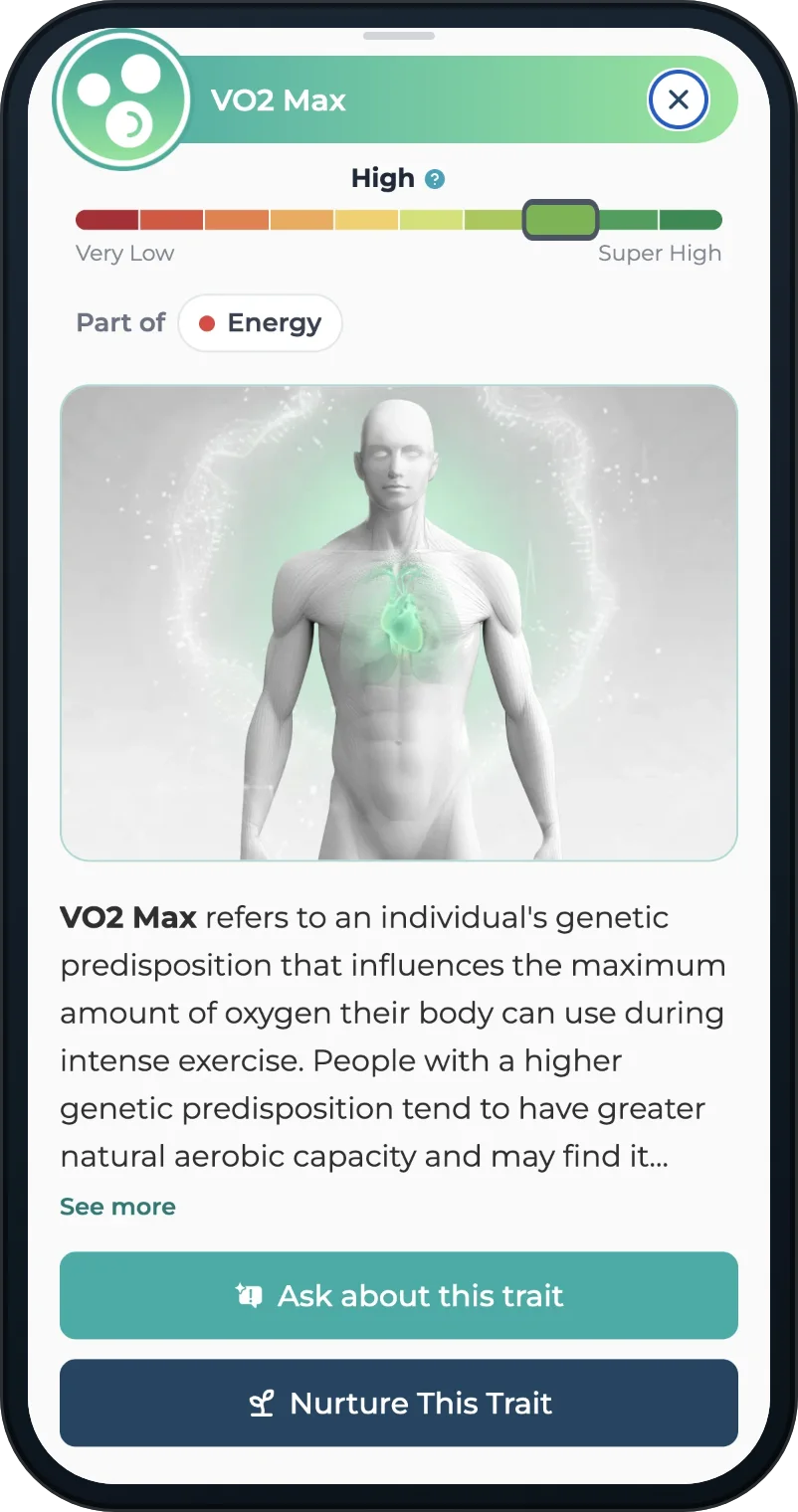
A public chatbot is still excellent at general questions. Ask it what the MTHFR gene does, or what VO₂ max means. The simplest rule fits in two sentences:
Ask public AI about DNA. Be much more careful about giving public AI your DNA.
What DNA-Wellness means
DNA-Wellness uses your genes as one layer of personal context for everyday wellbeing: nutrition, fitness, recovery, skin, energy and the rest.
Your DNA gives you a more personal starting point. The decisions about what to do next stay yours, and better informed.