DNA Stories Living with Genes

Get Cheat Codes To Aging And Longevity By Using Your Genes!

Everybody have a biological clock counting down to the end. What if we can slow down, or even reset that clock?

Cedric Lee

Founder and CEO, ConnectingDNA · · 7 min read

Editor's note. This issue first ran in December 2023 and keeps the voice it was written in. We are more careful today about what a DNA test can tell you, and What your DNA can and cannot tell you sets out where we stand.

Do you want to look younger and live longer?

I certainly do.

When I look good, I find that my wife appreciates me more (even though she gets slightly nervous at times), and I have a stronger desire to live longer.

In fact, most people are like me. We simply want people to appreciate us, so we can live life to the fullest.

So unless you have had a really bad life (in which case, you probably would not be reading this article), you should be pursuing tips and strategies for anti-aging and longevity as early as possible. Because I find that the older I get, the harder I have to run after solutions to recover my lost years.

But one question looms large. Is my aging and lifespan governed by my lifestyle or predetermined by my genes?

What Are Telomeres?

Scientists consider telomere length akin to a biological clock for aging and lifespan.

At the heart of inevitable aging are genes, or more precisely, the terminal end of your chromosomes that protect these genes, called Telomeres.

These telomeres actually do not contain genes themselves but help to preserve the integrity of your genetic material by acting as “protective caps” to prevent them from fraying, much like the plastic caps on your shoelaces.

But with each cell division, the telomeres on their chromosomes gradually shorten. When these telomeres are depleted, bad things happen to these cells. They will either mutate, become cancerous, or die, and through this process, aging occurs.
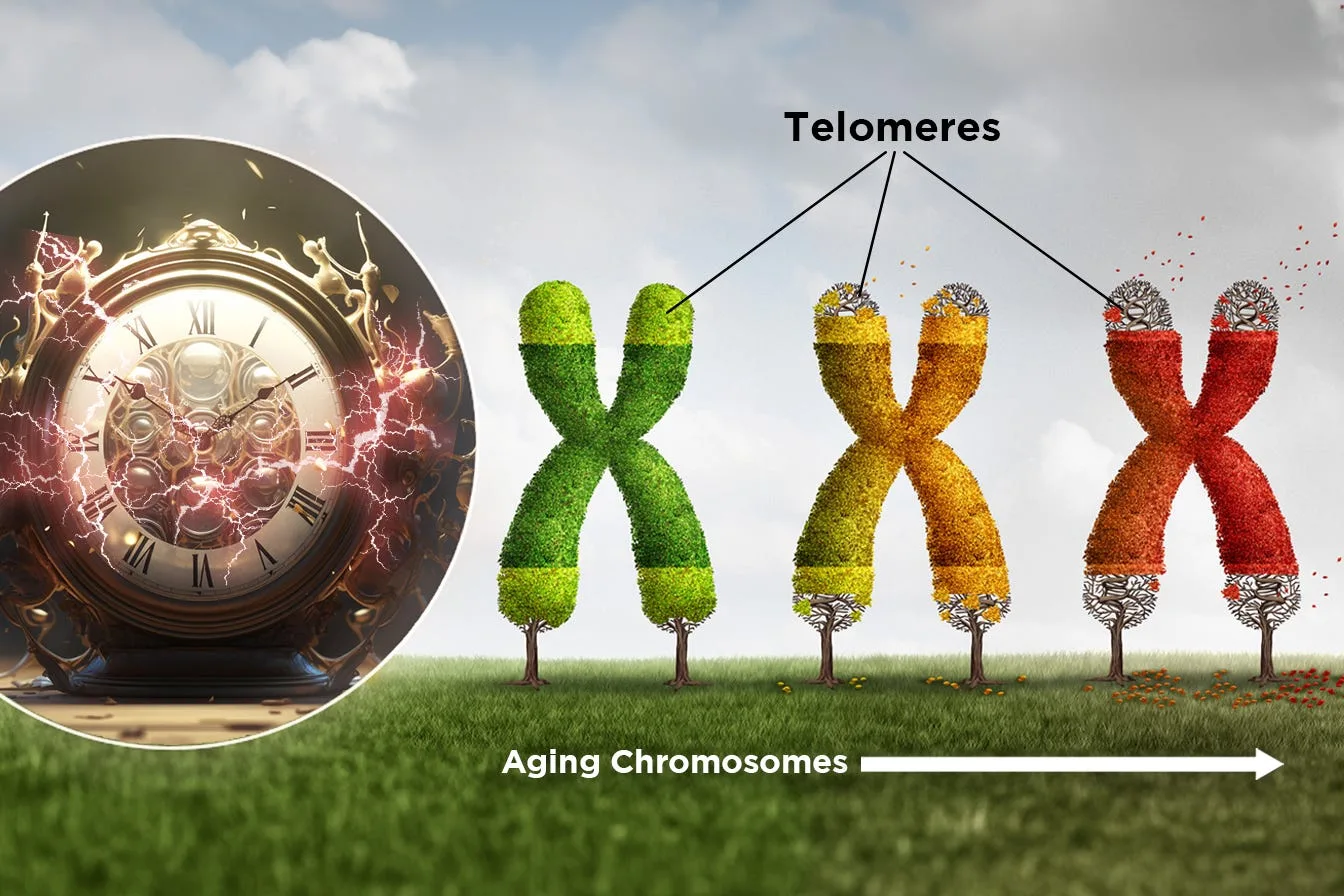
Four chromosomes drawn as topiary trees losing their leaves along a row, beside a clock face
Telomeres are like your cellular clock for aging. When our chromosomes get "worn out", the telomere tips get depleted and cells die. Image from Midjourney AI.

As a result, scientists consider telomere length akin to a biological clock for aging and lifespan.

However, not everyone is endowed with the same biological clock.

Just as everyone is born with different length of arms, fingers, nose (and other unmentionable appendages), length of telomeres differs from person to person as well.

This is significant. Because.

Longer Telomeres, Longer Life

Everyone is born with different length of telomeres. If you are lucky, you’ll have longer ones than others.

That is right. Research has shown that longer telomeres are associated with increased longevity, and slower aging. These extended telomeres naturally take longer to run out, allowing for more cell divisions, ultimately translating to stronger regenerative capacity for your body.

Imagine you are X-Men’s Wolverine, possessing the mutant power of extraordinarily long and durable telomeres that never run out.
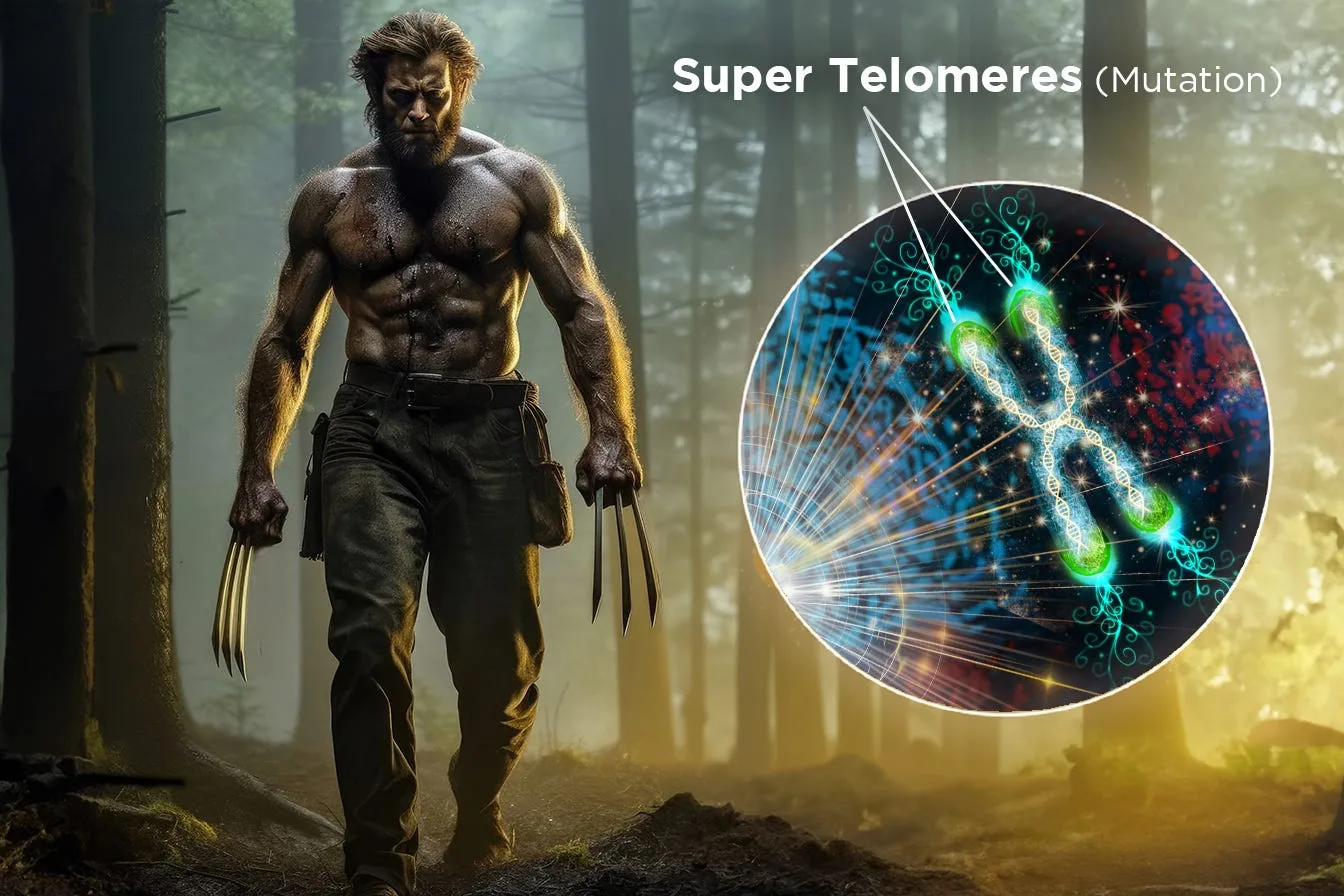
Wolverine walking through a forest beside a glowing chromosome whose tips are labelled Super Telomeres
If you have "Super Telomeres" like Wolverine, you can look fierce, but you will never look old and frail. Photo credits courtesy of Marvel Comics.

While none of us can attain this amazing superpower mutation, we can certainly take steps to slow down the reduction of our telomeres and even restore them.

And that brings us to.

Elongating Your Telomeres Through Epigenetics

Believe it or not, you can use proper lifestyle to control your genes and influence your telomeres.

Epigenetics refers to changes in gene expression that do not involve alterations to the underlying DNA sequence. Instead, it relies on lifestyle personalisation to modify the structure of your DNA expression.

Imagine if your DNA sequence is a program code (which does not change), your actions then determine the “settings” (for example, toggle high speed, low speed) of how your program runs. This is Epigenetics.

With epigenetics, you can control your genetic coding to preserve, regenerate, and even elongate the length of your telomeres.

Chuando Tan in a white shirt, looking far younger than his age
Meet Chuando Tan, a 57 year old Singaporean who consciously limits his intake of processed foods and sugar to achieve amazing anti-aging results. Don't be jealous, just do something about it. Extracted from my talk titled “Power of Personalization”.

Indeed, if you start early with epigenetic strategies that are personalised based on your genes, you can truly achieve some incredible feats of anti-aging! And because I believe everyone should age gracefully, I am sharing 5 epigenetic personalisation strategies below on how you can unlock your internal fountain of youth.

#1. Eat By Design, Not Default

Give your body the right “fuel-food” based on your genetic dietary needs, and it will function at peak condition. The correct nutrients not only support overall health but also contribute to the maintenance of your telomere length.
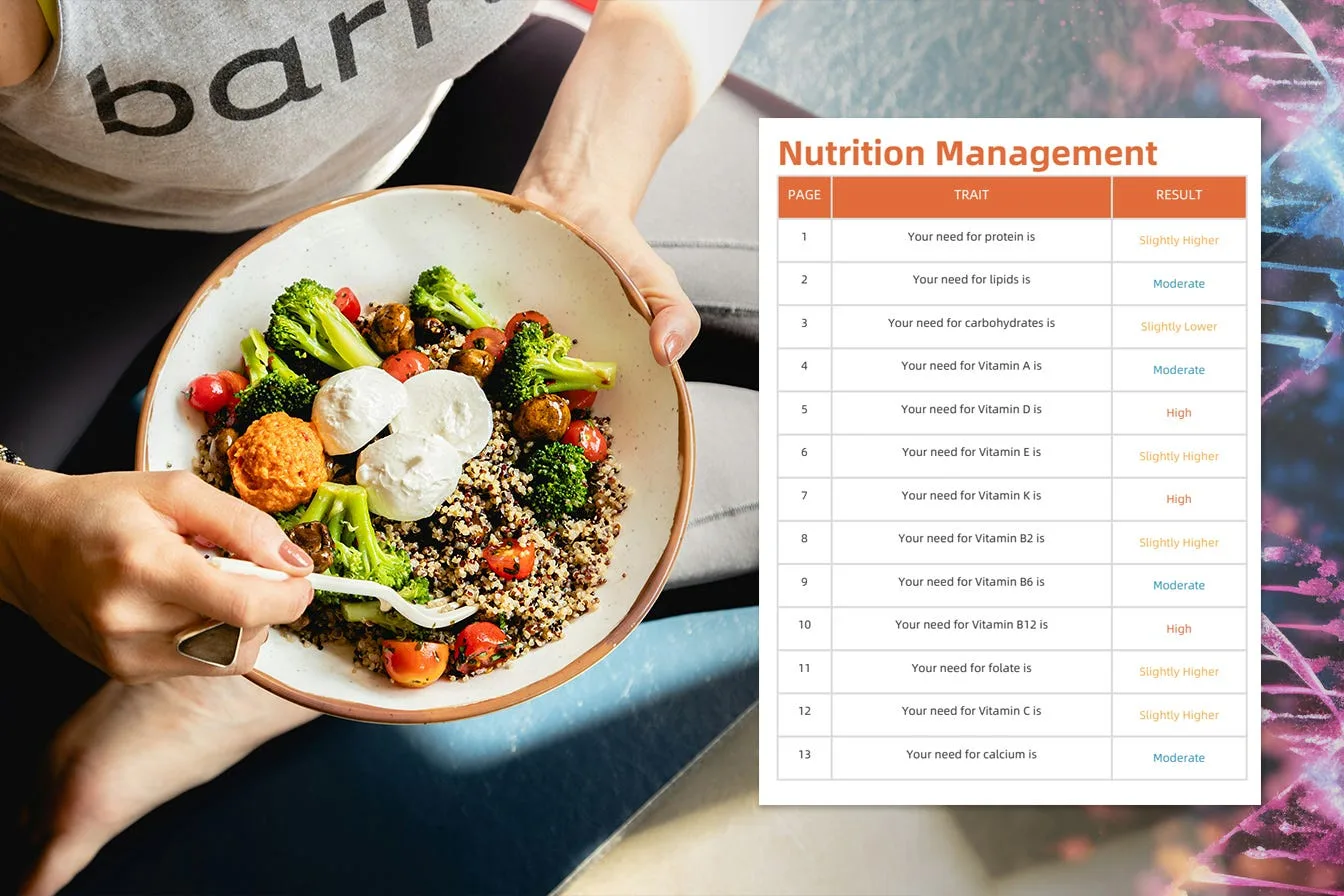
Hands holding a bowl of vegetables and grains beside a page of genetic nutrition results
Eating healthy is important, but healthy nutrients are not absorbed equally by your body. Photo credits by Unsplash.

Furthermore, reduce processed foods and sugars, and explore an anti-inflammatory diet rich in fruits, vegetables and whole grains. These foods have proven longevity benefits.

#2. Exercise Right, Age Right

Studies have suggested that exercise stimulates the production of telomerase, an enzyme that protects and even lengthens telomeres. In fact, in one study, women who exercised were found to have telomeres that were 8 years younger than women of the same chronological age who did not exercise.
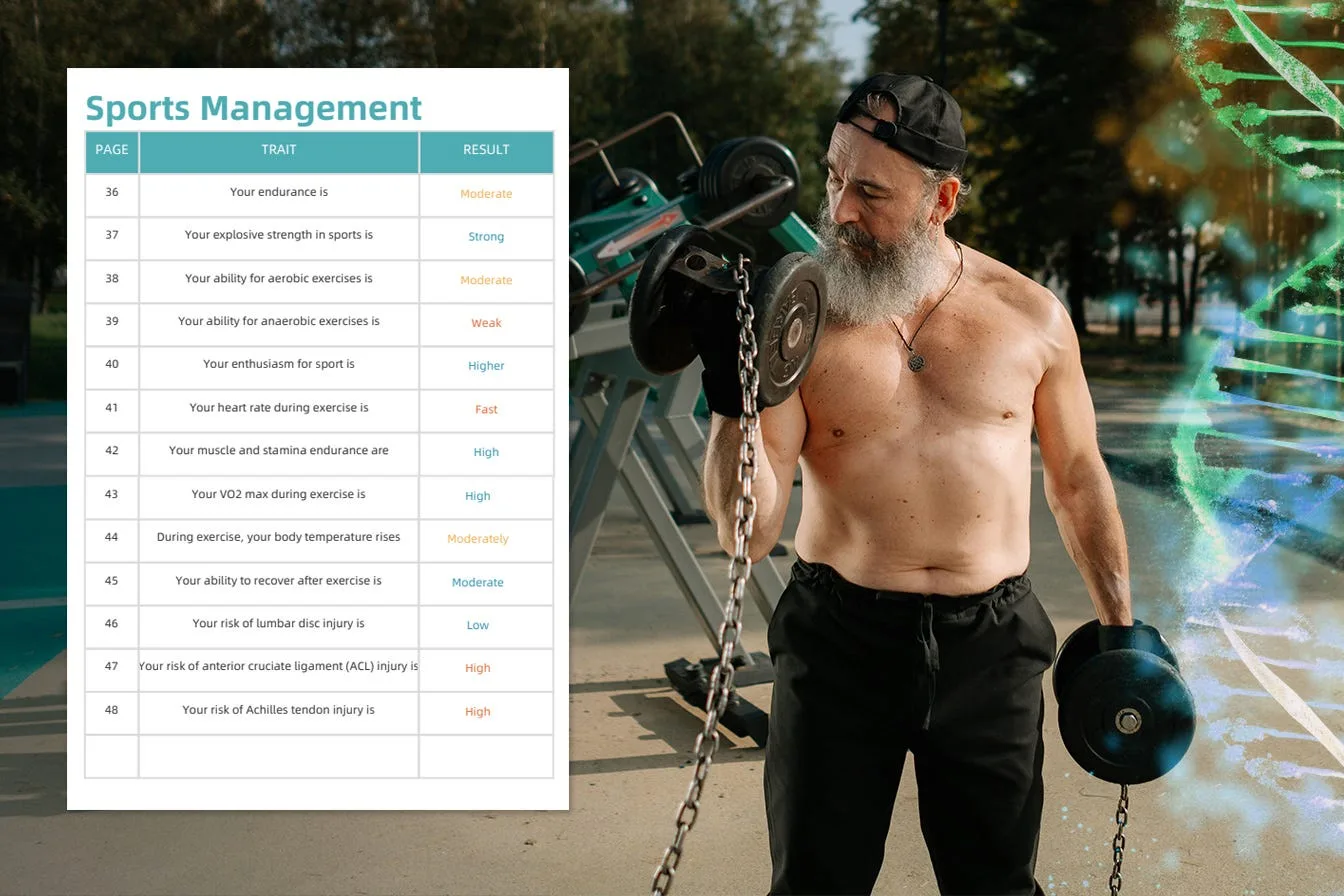
An older man carrying kettlebells in a gym beside a page of genetic sports results
Exercising earlier and with the right approach can help them age more gracefully. Photo credits by Unsplash.

To create even more impact, exercise according to your correct fitness profile to achieve maximum gain while avoiding certain cardiovascular risks.

#3. Know Your Stress Threshold

Chronic stress has been linked to accelerated aging through telomere shortening. But do you know that genetics also plays a part in how you can handle stress?
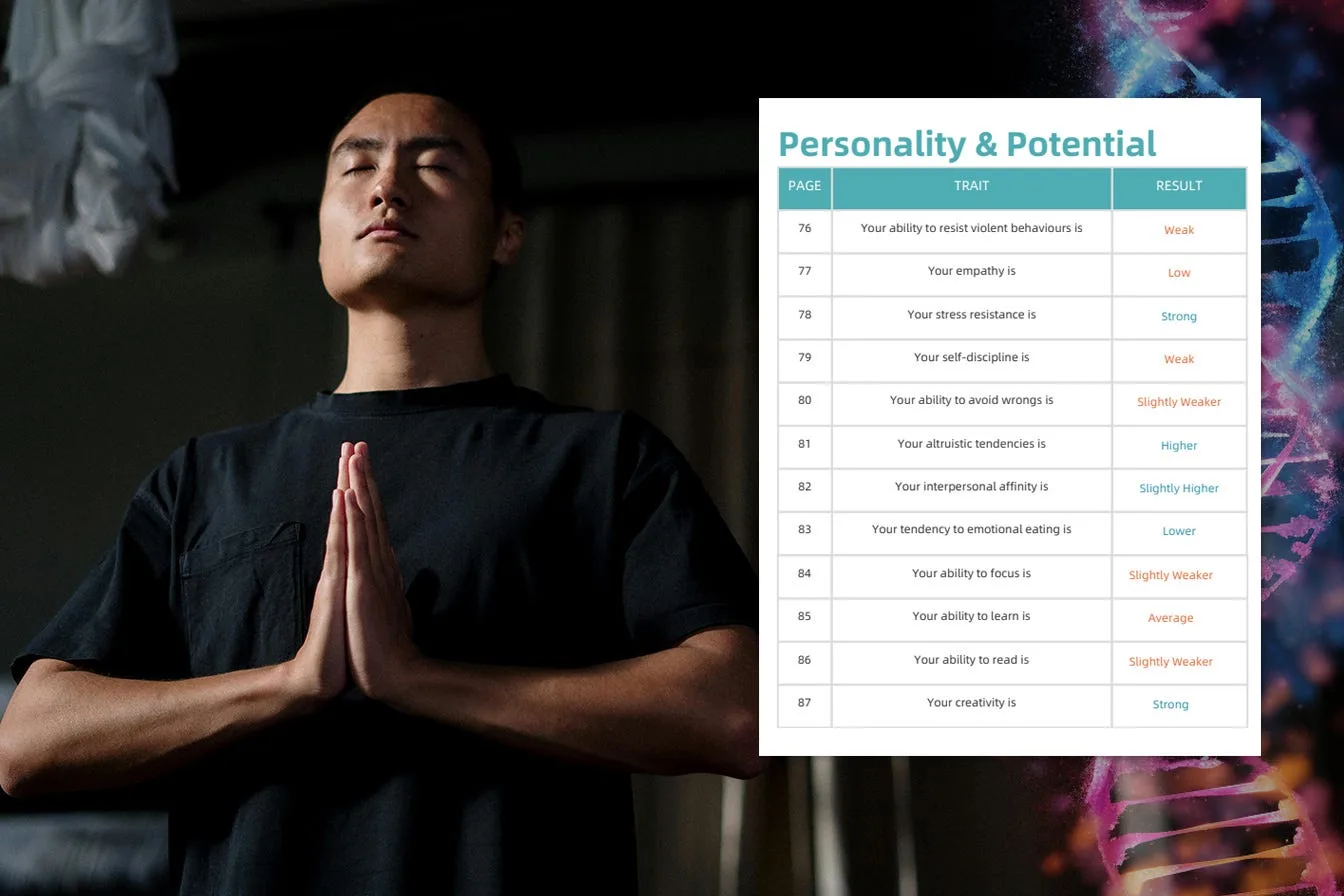
A man standing with his palms together in a moment of calm, beside a page of genetic personality results
Everyone handles stress differently. If you are aware how much stress you can take, you can take steps to manage it more effectively. Photo credits by Pexels.

Once you know your innate stress resistance, you are able to take preventive actions like meditation, yoga, or mindfulness to reduce, avoid, or recover from them.

#4. Sleep Deeper, Not Just Longer

Quality sleep is essential for cellular repair and maintenance. Getting insufficient sleep can influence telomere length, shortening telomeres even in childhood, which may lead to impaired health.
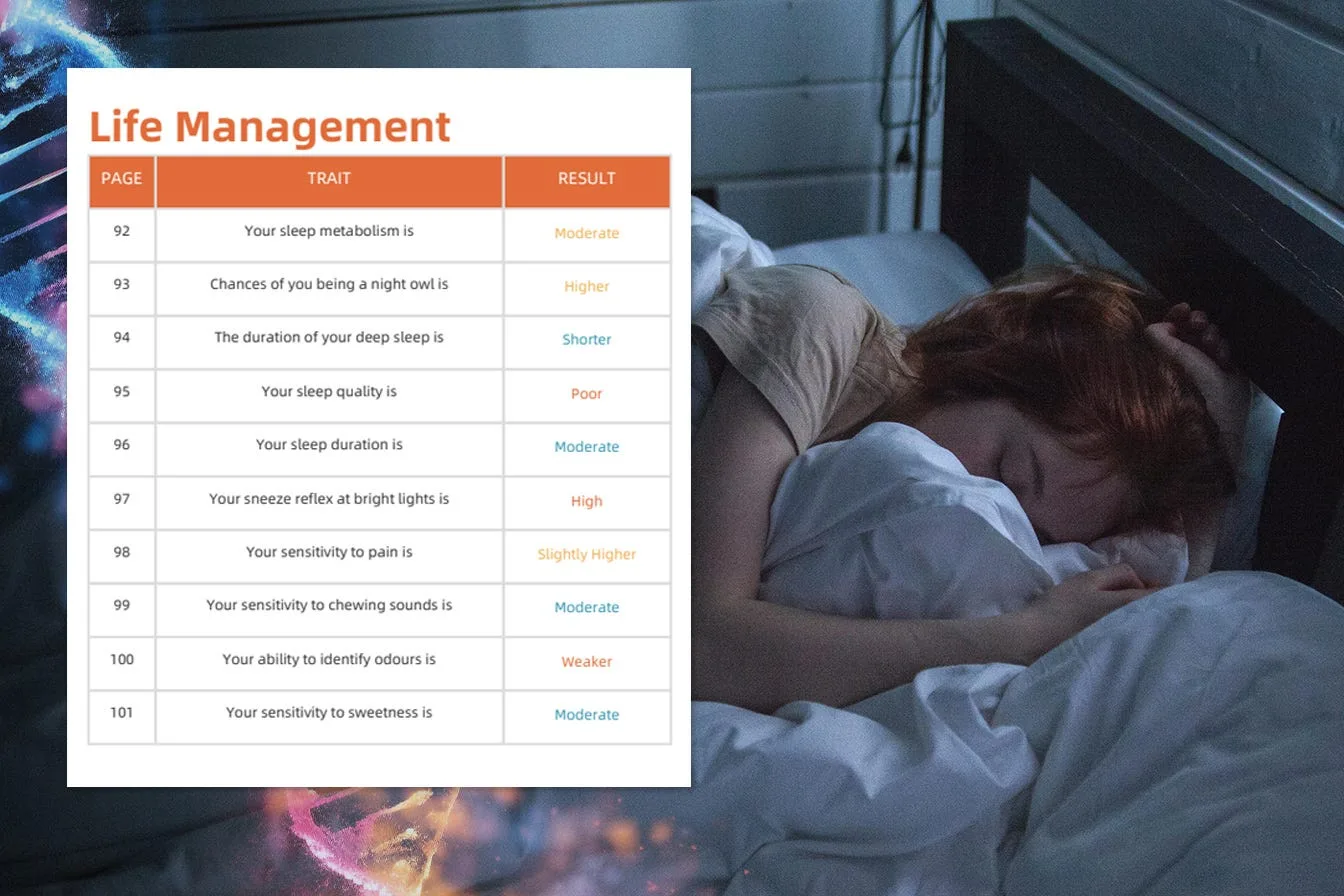
A woman asleep in a dark bedroom beside a page of genetic sleep results
Good sleep helps to rejuvenate the mind and the body. However, everyone has different sleeping tendencies. Photo credits by Pexels.

While some people may have disruptive sleep patterns due to their genetics, there are many methods to induce better sleep like avoiding the use of light-emitting devices before bedtime, and darkening your room to create a more conducive environment for sleep.

#5. Build Social Connections

Research suggests that individuals with strong social ties may experience slower telomere shortening. In fact, social isolation can lead to psychological stress which is linked to accelerated aging and adverse health outcomes.
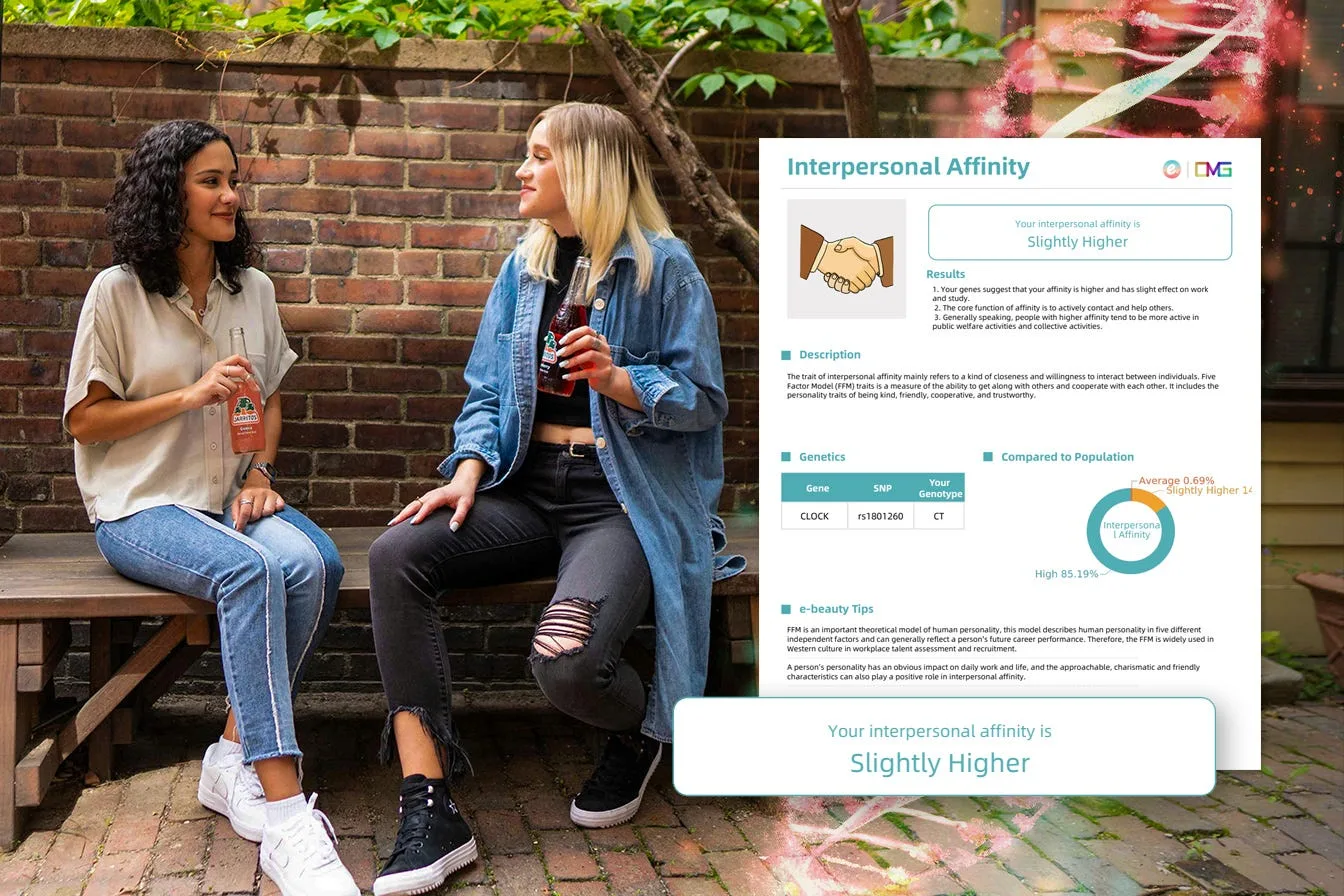
Two friends talking on a bench in a garden, beside a genetic report page on interpersonal affinity
Whether a person is introvert or extrovert is influenced by our genes. Understanding our social affinities can help us build better relationships.

While not everyone is born extroverted or has strong communication skills, social connections can still be cultivated over time. So spend time and effort to cultivate strong social bonds to maintain positive relationships.

Conclusion

Anti-aging and lifespan has improved considerably since the 1600s, when the average human lifespan was only 30 years. Scientists furthermore predict that life expectancy will continue to increase.

However, as we age, I would rather grow into a nice, ripe peach rather than age into a wrinkly raisin.
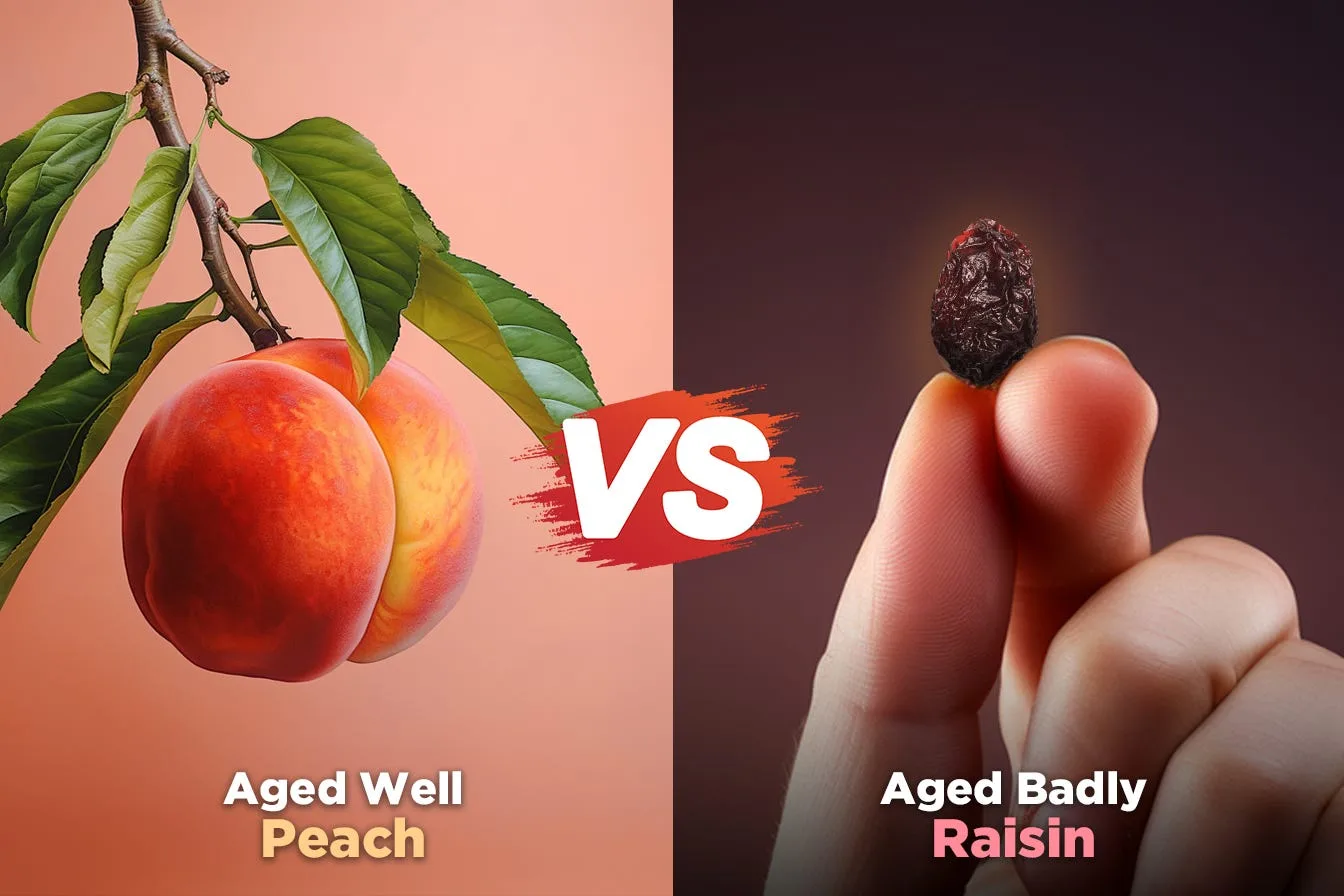
A ripe peach on the branch on one side, a shrivelled raisin held between two fingers on the other
The most fruity, and polite way I know to describe individuals on different ends of the aging spectrum. Image generated by Midjourney AI and edited in Photoshop.

The interaction between genes and lifestyle choices is a dynamic and ongoing process. By understanding the role of telomeres, gaining insights into your genetics, and employing the right epigenetic strategies, you can actively contribute to the narrative of your own longevity.

So as you journey through life, do not just focus on being “young at heart”, but focus on being “young in body” as well!

Sources

  1. Are telomeres the key to aging and cancer? (Genetic Science Learning Center, University of Utah, 2019)
  2. Telomere lengths are characteristic in each human individual (2002)
  3. Telomere extension turns back aging clock in cultured human cells (Stanford Medicine, 2015)
  4. Personalized nutrition and healthy aging (2020)
  5. Beneficial effect of physical exercise on telomere length and aging (2019)
  6. Sedentary lifestyle speeds up biological aging (Medical News Today, 2017)
  7. Stress, inflammation and aging (2012)
  8. Sleep duration and telomere length in children (2017)
  9. Psychosocial stressors and telomere length (2020)

Sleep, stress resistance and recovery are read in the Bio-Profile, and a Bio-Plan is where a trained partner turns them into a routine you can hold.

Cedric Lee

Cedric Lee

Founder and CEO, ConnectingDNA

Cedric has spent over twenty years in healthcare, wellness and technology, and has taken his own DNA test with more consumer labs than he cares to admit. He writes the Living with Genes newsletter and founded ConnectingDNA to turn genetic reports into something a person can act on.

Connect on LinkedIn ↗

First published on Living with Genes, Issue 10. Rewritten and brought up to date for this site.

Know someone who should read this?

Keep reading

All stories →

What your DNA can and cannot tell you

A short, honest list of what a wellness test can and cannot do.

5 Aug 2026 · 4 min read

DNA-Archetypes: the profiler for your body

Four-letter tests give you 16 types. Adding the body makes 32.

18 Jun 2026 · 5 min read

Gurmit Singh, Healthy Ageing Ambassador

Healthy ageing gets a voice all of Singapore knows.

27 Nov 2025 · 2 min read

What Is Your Hair Destiny? The Hairy Truth About Balding.

From full hair to farewell hair. Do you embrace fate or fight back? Unlock the secrets to your hair's (possible) demise.

25 Mar 2024 · 5 min read

Your Genes Might Make You Secretly Heroic And Selfless

Heroes may not just be the stuff of legends. In fact, the potential for heroism and selflessness may lie hidden within us.

12 Feb 2024 · 6 min read

The Genetic Symphony Between Chromosomes, Genes, And DNA

What do music and DNA have in common? If they aren't composed properly, you won't enjoy your life.

4 Dec 2023 · 6 min read

DNA Testing VS Health Screening Checkup: A Pilot's Perspective

Like water and oil: they flow the same, yet are totally different.

20 Nov 2023 · 5 min read

Your Heart Is Like A Car Engine. Unleash Its Power!

Some hearts are built like a F1 engine, while others can only power a lawnmower. Which one is yours?

30 Oct 2023 · 9 min read

Your Genes Have An Impact, It's A Multiplier!

Don't let your genes control you. Learn to control them!

24 Oct 2023 · 8 min read

7 Reasons Why Your DNA Report May Feel Inaccurate!

Most DNA reports are quite accurate, but things can sometimes get weird.

16 Oct 2023 · 9 min read

Consumer VS Medical DNA Testing: Unveiling Your Genetic Code!

Helping you dissect the best options you can have for your precious saliva sample.

9 Oct 2023 · 5 min read

Why you shouldn't upload your DNA report to ChatGPT

The same applies to Claude, Gemini and other public AI.

26 Sept 2026 · 6 min read

I have a DNA report. So what?

You read your DNA report once, then forgot it. Here is what it is for.

9 Jul 2026 · 7 min read

Cedric Lee's third year as top Genetics Influencer

Three years first in Singapore. Now third in the world.
23 Jun 2026 · 2 min read

ConnectingDNA awarded ISO 27001 certification

Independent proof that your DNA data is kept safe.

7 Apr 2026 · 2 min read

ConnectingDNA joins Google Cloud startup programme

More computing power behind every answer about your DNA.

12 Jan 2026 · 2 min read

How 30 years of eczema led to ConnectingDNA

One DNA test found the answer, and started a company.

15 Dec 2025 · 5 min read

ConnectingDNA opens operations office at BLK73

A new home for the team building your Bio-Profile.

10 Nov 2025 · 2 min read

We tell every hire our culture isn't for everyone

Changing the world takes a little bit of crazy.

23 Sept 2025 · 3 min read

ConnectingDNA launches AI DNA-Wellness marketplace in beta

Try the next step for your DNA report early, and help shape it.

15 Sept 2025 · 2 min read

Your genes don't care about wellness trends

The wellness jungle is loud. We're here to map it.

9 Aug 2025 · 4 min read

ConnectingDNA invited to Perth by WA Government

Western Australia came calling. Perth could be next.

29 Jul 2025 · 2 min read

ConnectingDNA selected for Meta Llama initiative

Picking the AI that makes your DNA report make sense.

22 Apr 2025 · 2 min read

ConnectingDNA selected for BLOCK71 Silicon Valley programme

Taking DNA-guided wellness into the toughest room in tech.

25 Nov 2024 · 2 min read

Cedric Lee named top Biology Influencer in Singapore

Plain-English genetics, ranked first in Singapore.

12 Nov 2024 · 2 min read

ConnectingDNA raises US$550,000 in pre-seed funding

Investors are betting on a DNA report you will actually use.

23 Oct 2024 · 1 min read

ConnectingDNA selected by Microsoft and NUS for Gen AI programme

Why the AI reading your DNA has Microsoft in its corner.

1 Apr 2024 · 2 min read

Grow Bigger Muscles With Your Genes? Yes You Can!

Don't sweat the bench-press, outsmart it! Learn how your genes can help you hack your way to a dream physique.

11 Mar 2024 · 5 min read

Are You Born A Fighter, Or A Thinker? Your Genes Tell The Story

Challenges in life (and work) are inevitable, but whether we fight on, overthink, or give up can be related to our genes.

26 Feb 2024 · 5 min read

When Bread Betrays You. How To Deal With Gluten Intolerance!

If you are bothered by persistent health issues, the sneaky villain could be in some of the foods you love to eat.

29 Jan 2024 · 8 min read

If You Are Asian, And Overweight? Blame Your Ancestors.

You are born a lean, mean, fat-storing machine, and it's all due to the ancestral genes passed down from your forefathers.

15 Jan 2024 · 4 min read

5 Ways Your Genes Make You Overeat, And Hard To Lose Weight!

Want to stay lean after all your festive feasting? You should first find out how your body works.

2 Jan 2024 · 6 min read

Don't Have The Highest IQ? You Can Still Be Damn Smart!

Honestly, I don't think I have super high IQ. But many of my peers still think I am damn smart.

26 Dec 2023 · 6 min read

Are Insurance Companies Using Your Genetic Data?

Well, they probably are, but NOT in the way you think.

25 Nov 2023 · 7 min read

5 Reasons To Consider A DNA Test: Unlock Your Potential!

Knowing yourself inside-out helps you appreciate life more.

13 Nov 2023 · 7 min read

Giving Our Children A Brighter Future. From Genes To Geniuses!

Raising kids is hard. But if we know our child's natural talents and traits, things might get a lot clearer, and easier.

6 Nov 2023 · 5 min read