DNA can give you a useful starting point for better everyday choices.
But it is not destiny, a diagnosis or a prediction of what will happen next.
DNA tends to be talked about in extremes.
At one end, people treat it as destiny: your genes determine everything.
At the other, DNA testing is treated as entertainment.
The useful answer sits somewhere in between.
Your DNA gives you a baseline: information about how your body may tend to respond to things such as caffeine, food, exercise, recovery and your environment.
At ConnectingDNA, we use that baseline to help make wellness more personal.
Not to tell you exactly what will happen.
But to give you a better place to start.

What DNA does well
DNA is useful for understanding tendencies that remain relatively stable.
For example, your genetic traits may provide clues about how you metabolise caffeine, respond to carbohydrates, recover from exercise or react to certain environmental factors.
That can be useful because most wellness advice starts with averages.
But you are not an average.
Your DNA can help narrow down what may deserve more attention, especially when something that works well for other people does not work as well for you.
It can also give you a better starting point instead of relying entirely on trial and error.
That is where DNA becomes useful: not as the final answer, but as better information for the next decision.
Where DNA falls short
DNA cannot tell you exactly how you will feel tomorrow.
Your sleep, stress, food, activity, environment, age and health all affect what happens from day to day.
Your genes provide the baseline. Your life changes what happens on top of it.
That is why we describe genetic traits as tendencies rather than certainties.
A trait might suggest that your body leans in one direction. It does not guarantee an outcome.
Your DNA describes your starting point. It does not write your future.

What can’t DNA tell you?
A wellness DNA test is not a medical diagnosis.
It should not replace a doctor, medical screening or professional treatment.
And genetic information should never be the sole reason you start or stop medical treatment.
ConnectingDNA is designed for wellness insights and everyday decisions, helping you better understand yourself and make more informed lifestyle choices.
Medical concerns still belong with qualified healthcare professionals.
In short, a wellness DNA test is good at your baseline:
- how you metabolise caffeine
- how you respond to carbohydrates
- how you recover from exercise
And it is not a diagnosis of anything:
- it cannot say how you will feel tomorrow
- it does not replace a doctor or a screening
- it is never the sole reason to start or stop treatment

How we use DNA
This is where ConnectingDNA comes in.
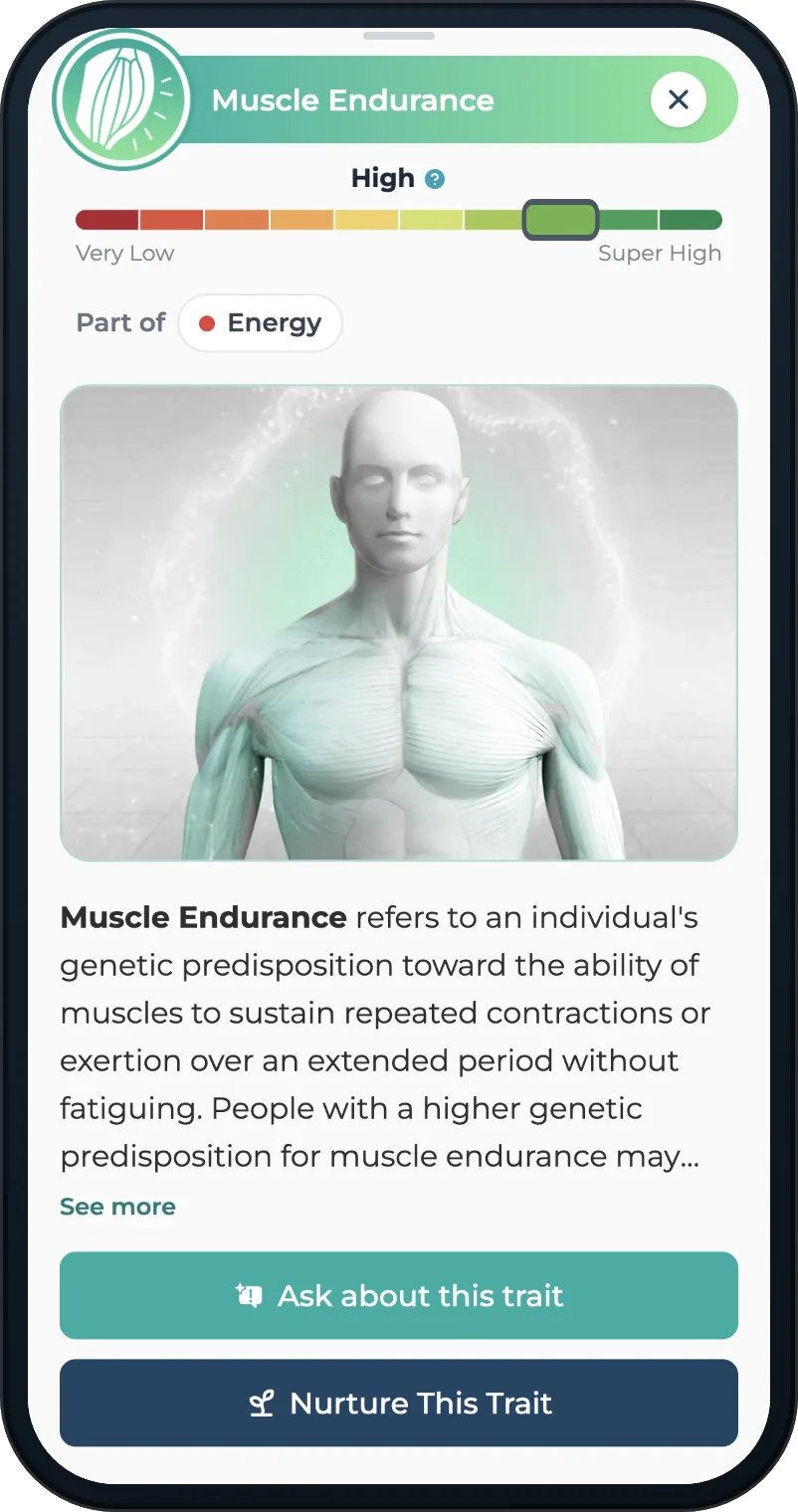
Instead of leaving your genetic information buried inside a long report, we turn it into a Bio-Profile designed to be easier to understand and use.
You can explore your traits in plain language, understand what they may mean for you, and ask questions about them.
Turn DNA from something you read once into something you can actually use.
Your data stays yours
DNA is some of the most personal information you can share.
Unlike a password, you cannot simply change it.
That is why control matters.
With ConnectingDNA, you can export your genetic data and delete it. We do not sell it.
Personalisation is only useful when it comes with trust.
Where to start
If you are curious but not ready for a DNA test, start with our free DNA-Archetype quiz.
It uses your answers rather than your DNA, so it is not the same as a DNA-based Bio-Profile. But it gives you an introduction to the way we think about different physical and behavioural tendencies.
When you are ready for a DNA-based view, you can take a test and build your Bio-Profile from your actual genetic data.